
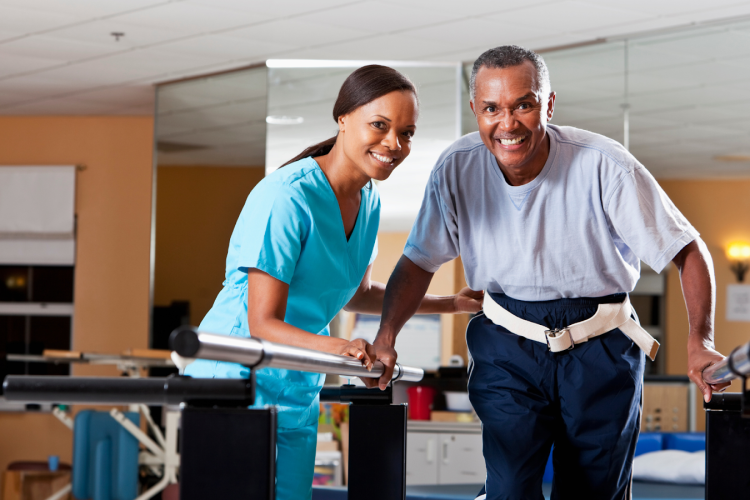
Surgery can fix the underlying problem, but rehab determines how quickly—and how fully—you get back to normal life. Modern physical therapy focuses on science-driven protocols that reduce pain, restore mobility, and rebuild capacity step by step. Here are eight proven ways PT accelerates recovery after common procedures like joint replacements, ACL reconstructions, spinal decompressions, rotator cuff repairs, and more.
- Early, guided movement (when cleared)
Research consistently shows that safe, early mobilization reduces complications such as stiffness, blood clots, and deconditioning. PT helps you start with micro-movements—ankle pumps, quad sets, gentle range of motion—then progresses to functional activities like sit-to-stands and short walks. The timing is individualized to your procedure and surgeon’s protocol, helping you reap the benefits of motion without jeopardizing healing tissue.
- Swelling and pain control without overreliance on meds
Excess swelling limits muscle activation and range, slowing everything down. Therapists use targeted strategies—compression, elevation, gentle lymphatic techniques, active muscle pumping, and cold therapy at the right intervals—to reduce edema. They also teach non-pharmacologic pain tools (paced breathing, graded exposure to movement, heat vs. ice timing, TENS when appropriate) so you can move more comfortably and rely less on medications as recovery advances.
- Restoring range of motion the smart way
The goal isn’t just to move; it’s to move well. PT breaks stiffness with dosing that respects surgical precautions and tissue healing timelines. For a total knee, that might mean early emphasis on extension, then progressive flexion; after shoulder repairs, carefully sequenced passive-to-active motion protects the repair while preventing adhesions. Session-by-session measurements show whether you’re on track, allowing the plan to adapt before plateaus set in.
- Rebuilding muscle activation and strength
Surgery and immobilization can cause rapid strength loss and “inhibition,” where muscles simply won’t fire on demand. Therapists use neuromuscular re-education—tactile cues, biofeedback, electrical stimulation when appropriate—to reawaken key muscles (quads after ACL, glutes after hip or back surgery, rotator cuff and scapular stabilizers after shoulder procedures). From there, progressive loading (isometrics → isolated strengthening → compound lifts) restores the capacity you need for daily life and sport.
- Gait training and functional movement retraining
How you move matters. Even a small limp can stress joints above and below, leading to compensations and pain. PT provides cueing and drills to normalize walking mechanics—step length, cadence, weight shift—and progresses you from walker to cane to independent walking at the right pace. Beyond gait, therapists rebuild core patterns like squatting, hinging, stair negotiation, and floor transfers so you can return to real-world tasks confidently.
- Scar and soft-tissue management
After incisions heal, restricted scar tissue and tight fascia can tether skin, limit glide, and create “pulling” sensations that reduce motion. Therapists use hands-on techniques and teach self-mobilization to keep tissue supple. Combined with targeted stretching and movement, this reduces discomfort and improves the quality of motion—especially important around knees, shoulders, and abdominal surgeries where scars cross major lines of pull.
- Balance, coordination, and proprioception
Post-surgery, your body’s position sense can be dulled by pain, swelling, or time off your feet. That’s risky: poor balance increases fall risk and slows progress. PT rebuilds your “internal GPS” with graded challenges—supported stance work, single-leg tasks, perturbation training, and eventually dynamic drills (e.g., step-downs, lateral movements). For athletes, this expands into agility and return-to-sport progressions that meet objective criteria before clearance.
- Education, pacing, and data-driven progression
Perhaps the biggest accelerator is clarity. PT gives you a roadmap: what to do daily, what to avoid, and how to spot normal soreness versus warning signs. You’ll learn pacing strategies to prevent boom-bust cycles—short, frequent sessions beat occasional overdoing. Measurable milestones (swelling, ROM, strength, gait symmetry, timed tests) keep motivation high and let the team adjust loads in real time for faster, safer gains.
How to use these advantages right now
- Follow your post-op precautions exactly—and ask why each exists. Understanding builds buy-in.
- Treat home exercises like prescriptions: consistent, frequent doses trump hero sessions.
- Track three numbers daily: pain (0–10), swelling (circumference or “feels puffy/not”), and steps or minutes of activity. These guide progression.
- Prioritize sleep and protein intake; both directly influence tissue repair and strength gains.
- Aim for “gentle challenge” each day—enough to stimulate adaptation, not enough to flare symptoms for 24+ hours.
If you’re stuck—pain isn’t trending down, range has plateaued, or you’re unsure how to progress—hands-on assessment can save weeks of trial and error. A therapist can identify the limiting factor (swelling, mechanics, strength deficits, fear of movement) and target it with the right intervention at the right time.
Ready to move faster and safer after surgery? Search for a qualified provider by looking up physical therapist near me to get a personalized plan, clear milestones, and the accountability that keeps recovery on track.