

Balance boards have moved beyond surf training and physical therapy clinics. People now use them for home workouts, standing desks, ankle exercises and family fun. With several designs available, though, choosing the right one can feel confusing.
The three common types are wobble boards, rocker boards and roller boards. Each moves differently and suits different goals and skill levels. Here’s how they compare.
Wobble Boards
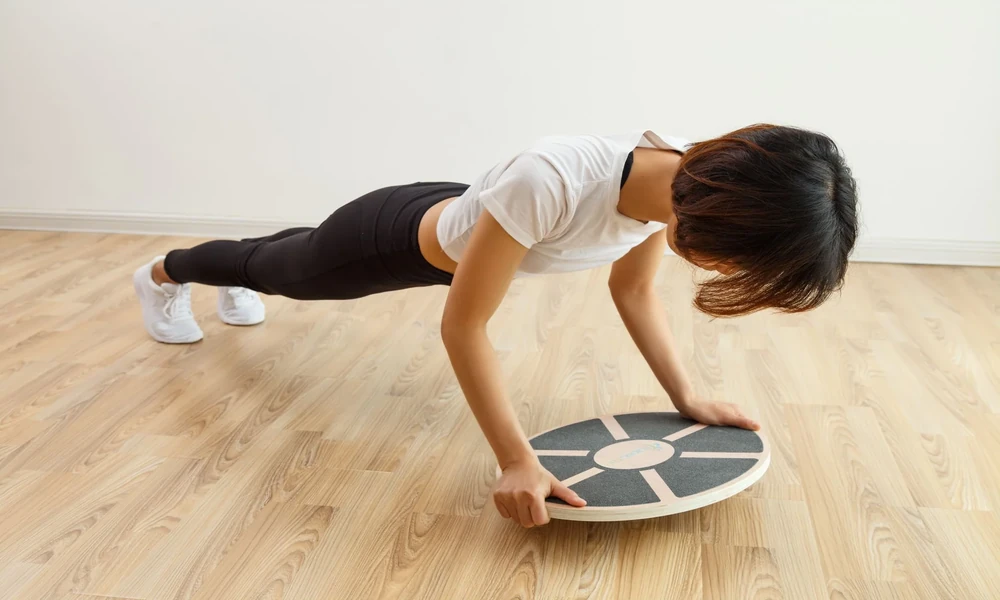
A wobble board is usually round, with a rounded base underneath. It can tilt in any direction, challenging your balance through a full range of movement.
Best for: General balance training, ankle exercises and controlled stability work.
Pros:
- Tilts in multiple directions
- Usually compact and easy to store
- Can be used for standing or seated exercises
Cons:
- May feel difficult for complete beginners
- Often less comfortable than a rocker board for longer standing-desk sessions
Rocker Boards
A rocker board tilts along one axis, front to back or side to side, depending on how it’s positioned. Its movement is more predictable than a wobble board’s.
Best for: Beginners, standing-desk users and anyone looking for a gentler introduction to balance training.
Pros:
- Relatively easy to learn
- Lets you focus on one direction of movement at a time
- Can be comfortable for short periods of standing-desk use
Cons:
- Offers less varied movement than a wobble board
- May feel too easy as your balance improves
Roller Boards
A roller board rests on a separate cylinder that moves beneath it. As the roller shifts, the board moves from side to side, creating a more dynamic challenge. These boards are often used for surf, skateboard and snowboard training.
Best for: Experienced users and people looking for sport-inspired balance practice.
Pros:
- Challenging and engaging
- Requires coordination and active balance control
- Can add variety to a workout
Cons:
- Has a steeper learning curve
- Falls are possible, especially when you’re new to it
- Requires more space than many other balance boards
Key Features to Compare
Size and foot space: A wider platform gives you more room to adjust your stance and may feel more stable.
Tilt angle: A steeper tilt can make a board harder to control. Some models have adjustable bases or interchangeable parts.
Surface grip: A textured or rubberised surface can help reduce slipping, particularly if you exercise barefoot.
Material: Wooden boards often feel solid, while plastic models may be lighter and easier to store. Quality varies by product, so check the board’s construction and care instructions.
Weight capacity: Check the manufacturer’s stated weight limit before buying.
Match the Board to Your Goals
- “I want to work on ankle strength and balance.” A wobble board offers movement in multiple directions.
- “I want to move more while working at a standing desk.” A rocker board provides a more predictable range of motion.
- “I want a challenging, sport-style balance workout.” A roller board may suit you if you already have experience with balance training.
- “I’m a complete beginner.” Consider starting with a rocker board, then trying a wobble board as you become more comfortable.
Independent reviews and buying guides can help you compare your options. Balance Foundry focuses on balance and mobility equipment, including features such as stability, build quality and ease of use.
Safety Tips for New Users
- Start beside a wall, counter or sturdy chair so you can steady yourself.
- Use the board on a non-slip surface and follow the manufacturer’s instructions.
- Keep your knees slightly bent and look forward rather than down at your feet.
- Practise for short periods and increase the challenge gradually.
- If you have a recent injury or a condition that affects your balance, check with a healthcare professional before using a balance board.
There isn’t one “best” balance board for everyone. Wobble boards offer movement in multiple directions, rocker boards provide a gentler starting point, and roller boards bring a bigger challenge for experienced users. Think about your goals, skill level and available space, then choose a board you’ll feel comfortable using regularly.
