

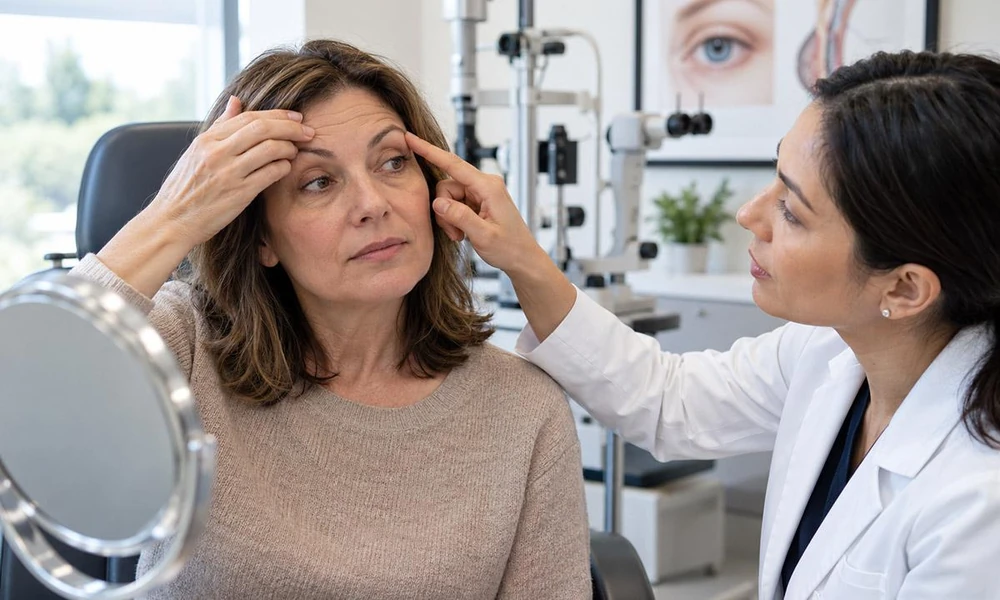
Droopy eyelids in adults usually come from one of two causes. Ptosis is when the eyelid itself sits too low because the muscle that lifts it has stretched or weakened. Dermatochalasis is extra upper eyelid skin that folds over the lashes. Both can block vision and make you look worn out. Treatment differs, so an exam matters. A sudden droop, especially with double vision or a headache, needs urgent care.
Maybe you’ve noticed that you have to raise your eyebrows to see clearly or that photos make you look sleepy no matter how rested you feel. Droopy eyelids are a common concern as we age, and they can affect more than appearance. For many people, they begin to block part of their vision.
Not all droopy eyelids are the same, though. Some are caused by the eyelid sitting too low, while others come from extra skin hanging over the lid. The difference determines the right treatment.
At Anaheim Eye Institute, which has served Orange County since 1958, eyelid concerns are evaluated by oculoplastic specialist Wenjing Liu, M.D., who focuses on eyelid, tear duct, and orbital conditions. Here’s how to understand what’s causing droopy eyelids and what can be done.
What Causes Droopy Eyelids?
Droopy eyelids in adults are most often caused by ptosis, where the eyelid margin sits too low, or dermatochalasis, where excess skin folds over the lid. Some people have both. Less commonly, drooping can signal a nerve or muscle condition, so a thorough eye exam is the best way to find the cause.
Your upper eyelid is lifted by a muscle called the levator, which attaches to the lid through a thin tendon. Above the lid, a layer of skin and fat creates the eyelid crease. As we age, both the muscle attachment and the skin can change.
Understanding which part has changed helps your eye doctor recommend the right approach. A procedure that removes skin won’t fix a lid that sits too low, and vice versa.
Ptosis: When the Eyelid Itself Sags
Ptosis (pronounced “TOE-sis”) means the upper eyelid margin, where the lashes sit, droops lower than normal. In adults, the most common cause is stretching or loosening of the levator tendon over time. The American Academy of Ophthalmology notes ptosis can affect one or both eyes.
Common causes of acquired ptosis include:
- Aging, as the levator tendon gradually stretches
- Long-term contact lens wear, particularly rigid lenses
- Previous eye surgery, including cataract surgery
- Eye rubbing or injury
- Nerve or muscle conditions, such as myasthenia gravis or nerve palsies
People with ptosis often tilt their heads back or raise their eyebrows to see. Over time, that extra effort can cause forehead fatigue and headaches.
Dermatochalasis: When Extra Skin Is the Problem
Dermatochalasis is the medical term for excess upper eyelid skin. As skin loses elasticity with age, it can sag and fold over the eyelid crease, sometimes resting on or over the lashes. The eyelid margin itself may be in a normal position.
This extra skin can create a heavy, hooded look and may block your upper and side vision. Some people also notice that their lashes feel pushed down or that the skin becomes irritated where it folds.
Sometimes, a drooping brow adds to the heaviness. When the brow descends with age, it pushes more skin onto the upper lid. Your doctor will consider your brow position as part of your evaluation.
Droopy eyelids aren’t just cosmetic; for many people, they quietly block part of their vision.
When Droopy Eyelids Need Urgent Care
Most droopy eyelids develop slowly over years. A sudden droop is different and can signal a serious medical problem. Seek urgent or emergency care if a droopy eyelid appears suddenly, especially with double vision, a severe headache, a change in pupil size, weakness, or trouble speaking.
These symptoms can point to conditions affecting the nerves, brain, or muscles that need prompt evaluation. Similarly, a droop that worsens throughout the day when you’re tired may indicate a neuromuscular condition and should be checked.
If you’re unsure, it’s always better to get evaluated. Your eye doctor can help determine whether further testing is needed.
How Droopy Eyelids Are Evaluated
A careful exam helps your eye doctor determine whether ptosis, dermatochalasis, or both are causing your droopy eyelids. The exam typically includes measuring how high the lid sits, how well the lifting muscle works, and how much extra skin is present.
Your doctor may also check:
- Brow position, to see if a low brow is contributing
- Eye surface health, including dryness, since lid surgery can affect tear coverage
- Eye alignment and pupils, especially if a nerve cause is possible
- Visual field testing, which measures how much the eyelid blocks your vision
Photos are often taken to document the eyelid position. These, along with visual field results, may be important if you plan to use insurance.
Treatment Options for Droopy Eyelids
The right treatment depends on the cause.
Ptosis Repair
For most adults, ptosis is treated with surgery that tightens or reattaches the levator muscle or tendon, raising the eyelid to a better position. The procedure is usually done on an outpatient basis with local anesthesia. Incisions are typically hidden in the natural eyelid crease.
For some people with mild acquired ptosis, prescription eye drops can temporarily lift the lid slightly. Your doctor can discuss whether this option is appropriate.
Upper Blepharoplasty
Upper blepharoplasty removes excess eyelid skin and occasionally a small amount of fat. It can open up the eyes, improve the field of vision, and create a more rested look. Like ptosis repair, it’s typically an outpatient procedure with the incision hidden in the crease.
Combined Procedures
Many people have both ptosis and excess skin. In these cases, ptosis repair and blepharoplasty may be performed together. If the brow has dropped significantly, a brow lift may also be discussed.
You can see examples of eyelid procedures on the eyelids page.
Managing Droopy Eyelids Before Treatment
Not everyone is ready for surgery right away, and some people prefer to wait. In the meantime, a few steps may help you stay comfortable and safe.
If droopy eyelids limit your side vision, be extra careful when driving, changing lanes, or navigating stairs. Good lighting at home can make a noticeable difference. If you wear contact lenses and notice your lid drooping, ask your eye doctor whether a different lens type or a break from contacts makes sense.
Skin that folds over the lashes can become irritated, especially in heat. Keeping the eyelid area clean and avoiding heavy creams near the lash line may help. Treating dry eye can also help make your eyes feel more comfortable.
Most importantly, keep track of changes. If your eyelids droop more over time, or you notice new symptoms such as double vision or weakness, let your doctor know promptly.
Insurance, Recovery, and What to Expect
Insurance may cover droopy eyelid surgery when it’s medically necessary, meaning the eyelid or skin significantly blocks your vision. According to the AAO, coverage typically requires photos and visual field testing showing the restriction. A written statement describing how the drooping affects daily activities can also help.
When surgery is purely cosmetic, it’s usually not covered. Your care team can explain which category your procedure falls into.
Recovery from eyelid surgery is generally manageable. Bruising and swelling are common for the first one to two weeks, and cold compresses help. Most people return to light activities within a few days and to work within about a week or two. Stitches are usually removed within a week. Final results settle over several weeks to months.
The right treatment for droopy eyelids starts with knowing whether the lid or the skin is the problem.
If you also have glaucoma or are planning cataract surgery, let your doctor know, since timing and eye drops may need to be coordinated.
Medical Disclaimer: This content is for informational purposes only and is not a substitute for professional medical advice. Consult your eye doctor for a personal diagnosis and treatment. If you develop a sudden droopy eyelid with other symptoms, seek urgent medical care.Conclusion
Droopy eyelids can come from a low-sitting eyelid (ptosis), extra skin (dermatochalasis), or both. Each has its own treatment, and many people find that correcting them improves both their vision and how rested they look. A careful evaluation is the first step, and a sudden droop always deserves prompt attention.
Do you have questions about your vision, or are you ready to explore your options? The team at Anaheim Eye Institute has been helping Orange County patients see clearly since 1958. Our oculoplastic specialist can evaluate your droopy eyelids and explain your treatment and coverage options.
Book an Appointment or call 714.533.2020.
Frequently Asked Questions
What is the difference between ptosis and dermatochalasis?
Ptosis means the eyelid margin itself sits too low, usually because the muscle or tendon that lifts it has stretched. Dermatochalasis means excess upper eyelid skin is folding over the lid. Both can cause droopy eyelids and block vision, but they’re treated differently, so an exam is needed.
What causes droopy eyelids in adults?
The most common causes are aging, which stretches the eyelid’s lifting tendon, and loss of skin elasticity, which creates excess skin. Long-term contact lens wear, previous eye surgery, injury, and nerve or muscle conditions can also contribute. An eye exam helps identify the cause.
When is a droopy eyelid an emergency?
A droopy eyelid that appears suddenly, especially with double vision, a severe headache, a change in pupil size, weakness, or trouble speaking, needs emergency evaluation. These symptoms can point to a serious nerve or brain problem. Gradual drooping over years is usually less urgent but still worth evaluating.
Does insurance cover droopy eyelid surgery?
Insurance may cover eyelid surgery when droopy eyelids significantly block vision. Coverage usually requires visual field testing and photos documenting the restriction. Surgery done only for cosmetic reasons is typically not covered. Your care team can help you understand your benefits.
How long is recovery after eyelid surgery?
Most people have bruising and swelling for about one to two weeks after eyelid surgery. Many return to light activities within a few days and to work within one to two weeks. Final results usually settle over several weeks to a few months.
