

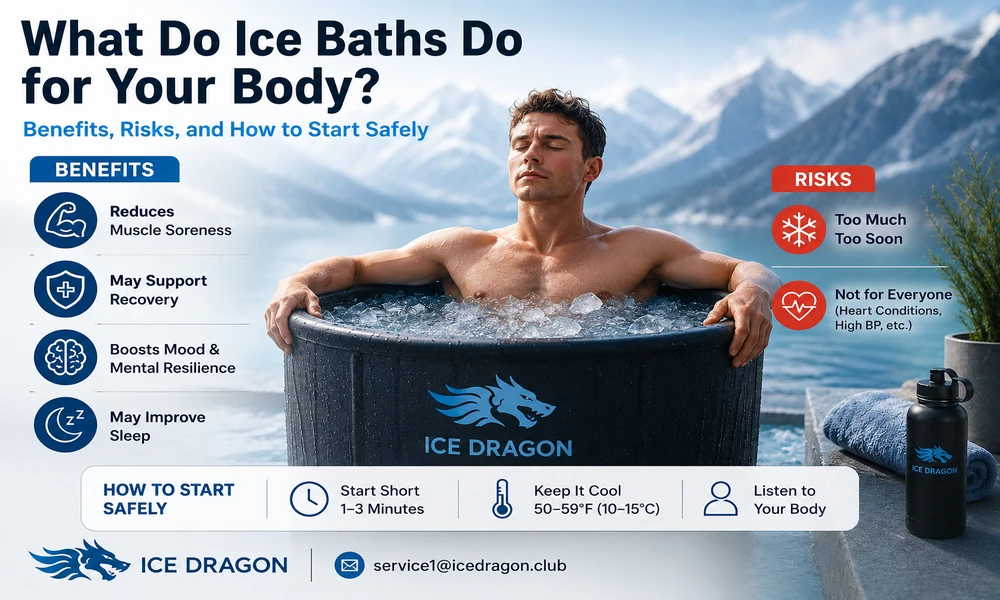
Ice baths used to be something only pro athletes bothered with. Now everyone from marathon runners to office workers is climbing into a tub of freezing water before breakfast. So what’s actually going on inside your body when you do it – and is it worth the shivering?
What Happens the Second You Get In
Cold water triggers a fast chain reaction. Your blood vessels tighten, your breathing speeds up, and your body scrambles to protect its core temperature.
| Body System | Immediate Response |
|---|---|
| Blood vessels | Constrict, pushing blood toward vital organs |
| Heart rate | Spikes briefly from cold shock |
| Breathing | Quickens, often with an involuntary gasp |
| Stress hormones | Surge at first, then settle |
| Core temperature | Drops slightly, triggering shivering |
Once you get out and warm up, blood rushes back to your muscles. That in-and-out cycle – vessels tightening, then flooding open again – is the mechanism behind most of the recovery claims tied to cold plunging.
The Real Benefits
- Faster muscle recovery. The cold may limit swelling around stressed muscle tissue after hard training.
- Less next-day soreness. Many athletes report noticeably less stiffness after intense sessions.
- A genuine mood lift. Cold exposure can raise dopamine and lower cortisol, which is why people often describe feeling clear-headed and calm afterward.
- Better sleep. Some research on endurance athletes links cold water immersion to deeper, less interrupted sleep.
- More stress resilience over time. Repeated cold exposure appears to train the nervous system to handle stress more calmly, on land and in the water.
- A quick way to cool down. If your core temperature spikes from heat or overexertion, cold water brings it down fast – this is actually used in emergency treatment for heat illness.
It’s worth being honest here: not every claim is nailed down. Reviews from major medical institutions note that the research base is still thin, and some effects – like the popular claim about better fat metabolism – need more solid evidence before anyone can call them proven.
Know the Risks
- Cold plunging isn’t risk-free, and it isn’t for everyone.
- Hypothermia can set in surprisingly fast, especially in water colder than 59°F (15°C).
- Cardiovascular strain – the sudden jump in heart rate and blood pressure can be dangerous for people with heart conditions.
- Cold shock can cause panic or gasping, which is risky if you’re in deep water alone.
- Blunted muscle growth – if your goal is building muscle, jumping in right after lifting may work against you. Waiting several hours is generally the smarter move.
Anyone with heart disease, diabetes, Raynaud’s syndrome, or who is pregnant should check with a doctor before trying this.
How Cold, How Long
There’s no single “correct” protocol, but most guidance clusters around a similar range.
| Experience Level | Water Temperature | Suggested Duration |
|---|---|---|
| Beginner | 55-60°F (13-16°C) | 1-3 minutes |
| Intermediate | 50-55°F (10-13°C) | 3-5 minutes |
| Experienced | 39-50°F (4-10°C) | 5-10 minutes |
Most of the benefit shows up in the first few minutes. Staying in longer doesn’t multiply the reward – it mostly just multiplies the risk. A timer and a thermometer are worth more than bravado here.
Getting Started Safely
- Ease in with cold showers for a week or two before your first full plunge.
- Breathe out slowly as you sit down – fighting the gasp reflex is half the battle.
- Never do your first few sessions alone.
- Have a towel and warm, dry clothes ready before you get in, not after.
- Let your body rewarm naturally rather than jumping straight into a hot shower.
If you’d rather skip the bathtub-and-bagged-ice setup, cold plunge communities and specialist retailers such as Ice Dragon can point you toward properly sized tubs and guidance for building a routine that actually sticks.
In Short
Ice baths cause a real, measurable chain of events in your body – blood vessels constrict, stress hormones shift, and core temperature drops – and this cascade is linked to genuine benefits like faster recovery, less soreness, a mood boost, and better sleep, even though some claims are still backed by limited research. The practice does carry real risks, from hypothermia to cardiovascular strain, so it pays to start slow, keep sessions short, use a thermometer, and never go it alone the first few times. Done sensibly – a few minutes, a few times a week – it’s a low-cost habit that a lot of people find genuinely worth the shiver.
