

Key Takeaways
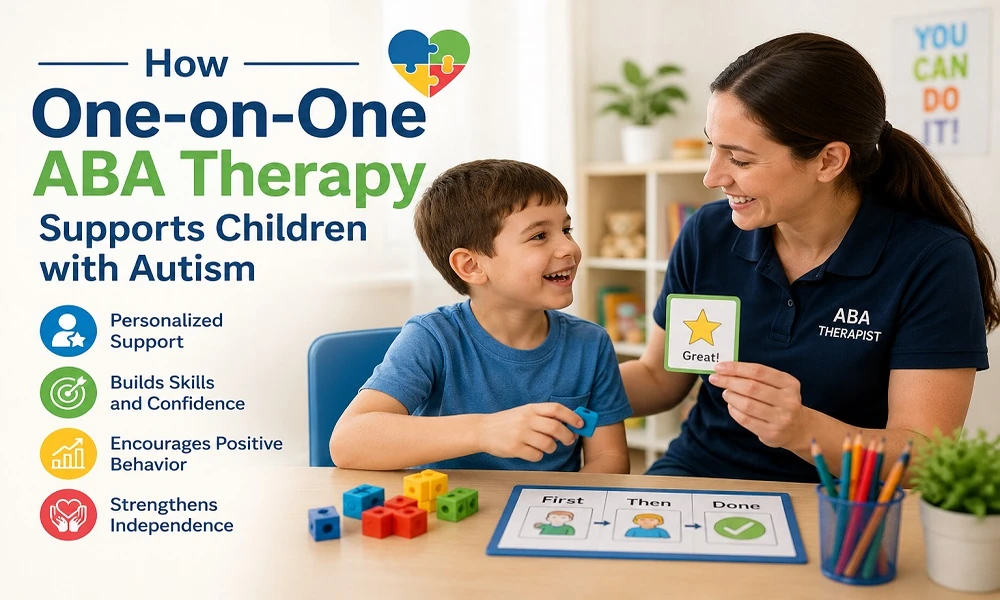
One-on-one ABA therapy plays a crucial role for children with autism. This form of treatment ensures individualized attention, encouraging measurable progress tailored to each child’s particular needs.
When children participate in specialized ABA therapy, they tend to reach developmental milestones quicker than those involved in group environments. The focused approach of the therapist is key to this accelerated progress.
Effective ABA therapy hinges on using custom strategies that arise from thorough evaluations of children’s skills and interests, guaranteeing that techniques resonate with each individual child.
Through one-on-one sessions, ABA therapy promotes the development of daily living skills via hands-on practice, enabling children to apply what they learn in real-life situations, thus fostering confidence and independence.
Additionally, ABA therapy enhances social skills through role-playing exercises. This practice allows children to interact with peers and nurture meaningful connections beyond therapy walls.
Communication skills take center stage in one-on-one ABA therapy. Techniques often include visual aids and play-based activities, aimed at promoting interactive language growth.
When selecting an ABA therapy program, clients should assess the provider’s credentials and their commitment to customizing goals. This ensures effective, personalized treatment for each child.
The Powerful Impact of One-on-One ABA Therapy
How Individualized Attention Fuels Progress
Every child with autism brings a distinct set of strengths and challenges to the table. That’s precisely why one-on-one ABA therapy is so vital-it’s tailored to fit the child’s individual needs, significantly enriching their learning experience. A dedicated therapist is able to observe and adjust interventions based on immediate feedback, creating an environment where learning can truly flourish.
Not all children react to the same approach. Some might thrive with visual supports, while others benefit from auditory prompts. This variability is exactly where individualized attention shines. Experts have observed that children in personalized sessions typically reach milestones more quickly than their peers in group settings. Therapists can focus their efforts on what truly resonates with each child.
Effectiveness of Tailored Approaches in Therapy
The power of ABA therapy lies within its adaptability. While traditional methods may not connect with every child, customized strategies certainly can. The journey begins with careful assessments. Therapists often utilize evaluation tools that take into account the child’s current abilities and personal preferences, making sure strategies align closely with their needs.
Children frequently show remarkable responses when lessons tap into their interests. For example, weaving a child’s favorite characters into therapy can significantly boost engagement. Studies suggest that when the therapy environment reflects the child’s world, the outcomes can be striking. This engaging approach fosters not just learning, but excitement about progress as well.
The journey of each child is unique; individualized therapy honors and supports that path.
Building Essential Life Skills Through ABA Therapy
Daily Living Skills: A Ground-Up Approach
Daily living skills are essential for fostering independence. In one-on-one ABA therapy, the emphasis is on teaching these skills through active engagement and repetition. Professionals often prioritize core tasks like dressing, grooming, and meal preparation, focusing on hands-on involvement each session. It’s all about engaging the child’s senses and ensuring thorough understanding of each step.
Typically, children learn more effectively when they can apply their knowledge directly in a secure setting. This might mean cooking together or practicing hygiene routines. Such practical lessons bring real-world advantages, bolstering a child’s self-assurance during everyday activities.
- Modeling: Therapists demonstrate behaviors before allowing children to practice.
- Visual Supports: Checklists or visual cues reinforce sequences in tasks.
- Reinforcement: Immediate praise or rewards motivate children to participate in daily living activities.
Enhancing Social Skills in Real-World Settings
Engaging with peers can be a hurdle for many children. However, one-on-one ABA therapy allows for navigating social nuances more seamlessly. A therapist can create various scenarios, employing role-playing to impart crucial conversational skills, turn-taking, and non-verbal cue recognition.
Practicing in controlled settings builds confidence, paving the way for these lessons to transfer into real-world interactions. Clients often notice their children beginning to interact more with peers, initiating conversations, sharing toys, and demonstrating empathy. This transition from isolation to connection signifies a remarkable change. It’s not merely about playing; it profoundly enhances life quality.
Social skills learned in therapy turn into friendships and meaningful connections.
Opening up Communication Potential with Focused Strategies
Language Development: Techniques that Truly Work
Language serves as the bridge to connections. In one-on-one ABA therapy, building communication skills is paramount. Therapists frequently employ a variety of strategies tailored to align with the child’s developmental stage. Some techniques involve visual aids, teaching sign language, or utilizing picture exchange systems. Engaging storytelling or playful methods make language development a natural process.
Children usually flourish when communication is interactive. Integrating games or storytelling opens avenues for expression. Celebrating small achievements-like pronouncing a word or starting a conversation-enhances motivation. Parents and professionals, alike, can foster these skills at home by incorporating techniques gleaned from therapy sessions.
- Modeling Language: Children imitate the language used by therapists, encouraging spontaneous speech.
- Structured Play: Crafting scenarios that call for language use strengthens expression.
- Positive Reinforcement: Rewards for verbalizing words or phrases can speed up learning.
Behavioral Techniques that Enhance Interaction
Behavior plays a pivotal role in successful communication. Utilizing behavioral techniques often brings about rapid improvements. Strategies like prompting and fading guide children toward independent interaction, eliminating feelings of being overwhelmed. It becomes a collaborative effort: the therapist leads and then gradually empowers the child for greater independence. This also nurtures resilience in various social contexts.
As behavioral challenges diminish, children often begin to engage more openly. Asking for help transforms from a daunting task to an easier one, while sharing feelings shifts from intimidating to approachable. Witnessing these advancements is exhilarating-not just for therapists, but for families, too.
Choosing the Right ABA Therapy Program for Your Child
Key Factors to Consider in Selecting a Provider
Finding the right ABA therapy program can seem overwhelming, yet it’s critical for achieving positive outcomes. Parents should consider a range of factors during their selection process. A provider’s credentials in applied behavior analysis are vital. Specialists well-trained in ABA techniques possess a wealth of insight, offering reassurance when addressing a child’s unique needs.
Individualization also stands out as a significant factor. Are children evaluated thoroughly? Is there a focus on creating tailored objectives? Programs that adhere to a one-size-fits-all model generally don’t meet expectations. Families should prioritize providers who demonstrate flexibility and attentiveness to their child’s specific requirements.
- Experience: Review therapists’ backgrounds and specialized training.
- Flexibility: Evaluate their readiness to adapt strategies for your child’s needs.
- Consultation: Use initial meetings to gauge compatibility and comfort levels.
Evaluating Therapy Quality and Effectiveness
Assessing the effectiveness of an ABA therapy program is fundamentally important. Methods like progress tracking need to be clear and accessible. Parents should expect regular updates that highlight improvements and ongoing challenges. Such communication encourages collaboration between families and therapists.
Frequent assessment of goals also helps maintain focus. Each child develops at a distinct rate, so having flexible expectations is essential. Clients often notice increased engagement when therapy adapts alongside their child’s progression. Observable behavior changes frequently serve as clear indicators of therapy quality.
Every child’s journey is exceptional, and while the paths may vary, the destination remains the same-nurturing independence, joy, and connection.
FAQ
What age group benefits most from one-on-one ABA therapy?
Professionals often point out that children as young as two years old can substantially benefit from one-on-one ABA therapy. Early intervention is crucial; it lays the foundation for long-term success, facilitating growth in vital areas like communication and social skills.
How long should a child participate in ABA therapy?
The length of ABA therapy can differ widely based on individual needs. Some children thrive within intensive programs, attending multiple sessions weekly over several years, while others might gain from shorter interventions. Adjustments are made as progress becomes evident.
Can parents play a role in the therapy process?
Absolutely. Parents are key players in the success of ABA therapy. By practicing techniques at home, they reinforce lessons learned during sessions. This continuity significantly boosts the child’s overall learning experience.
What kind of progress can be expected from one-on-one ABA therapy?
Progress can take various forms, usually noticeable in enhanced communication, social interactions, and practical daily living skills. Many families observe significant improvements in their child’s ability to engage with peers and navigate everyday tasks, reflecting meaningful growth.
How does one-on-one ABA therapy differ from group sessions?
One-on-one ABA therapy delivers customized attention and specialized strategies, directly addressing each child’s unique requirements. Group therapy often falls short of this focused approach, making it difficult to cater to individual differences and ultimately restricting overall effectiveness.
Are there specific certifications that ABA therapists should have?
Yes, when searching for an ABA therapist, look for credentials such as Board Certified Behavior Analyst (BCBA) or Board Certified Assistant Behavior Analyst (BCaBA). These qualifications indicate a high level of training and expertise in the field of applied behavior analysis.
What role do parents play during therapy sessions?
Parents are often encouraged to observe and participate in therapy sessions, fostering a collaborative relationship with the therapist. This active involvement allows parents to learn techniques that can be reinforced at home, enhancing consistency and efficiency in treatment.
How can program progress be monitored effectively?
Effective monitoring of ABA therapy progress incorporates regular assessments and ongoing communication between therapists and families. Parents should anticipate consistent updates about goals, achievements, and necessary adjustments to ensure the therapy aligns with their child’s evolving needs.
Useful Resources
- American Psychological Association (APA)
- Autism Society
- Behavior Analyst Certification Board (BACB)
- National Institute of Child Health and Human Development (NICHD)
- National Alliance on Mental Illness (NAMI)
- Autism Speaks
- Centers for Disease Control and Prevention – Autism Spectrum Disorder
- American Speech-Language-Hearing Association (ASHA)
- NIH – ABA Therapy Information
