

Post-injury soft tissue rehabilitation with manual and instrument therapy is a structured clinical process that addresses what happens to muscles, tendons, ligaments, and fascia after they have been injured. The injury is only the beginning. What follows, the healing process and how it is guided, determines how fully function is restored and how quickly the patient returns to the activities that matter to them.
What Soft Tissue Injury Actually Involves
When a muscle, tendon, or ligament is injured, the body responds with inflammation followed by the production of new tissue to repair the damage. This process is necessary and, in principle, effective. But the new tissue produced during healing is not the same as the original. Scar tissue is laid down in a less organised pattern than healthy tissue, and without appropriate loading and mobilisation during the healing phase, it can form adhesions that restrict movement and alter the mechanics of the surrounding structures.
The result, in many cases, is a healed injury that is technically closed but functionally compromised. The patient may have no open wound and no acute pain, but the affected area lacks its pre-injury range of motion, strength, or resilience. This is the condition that post-injury soft tissue rehabilitation is designed to address.
The Role of Manual Therapy
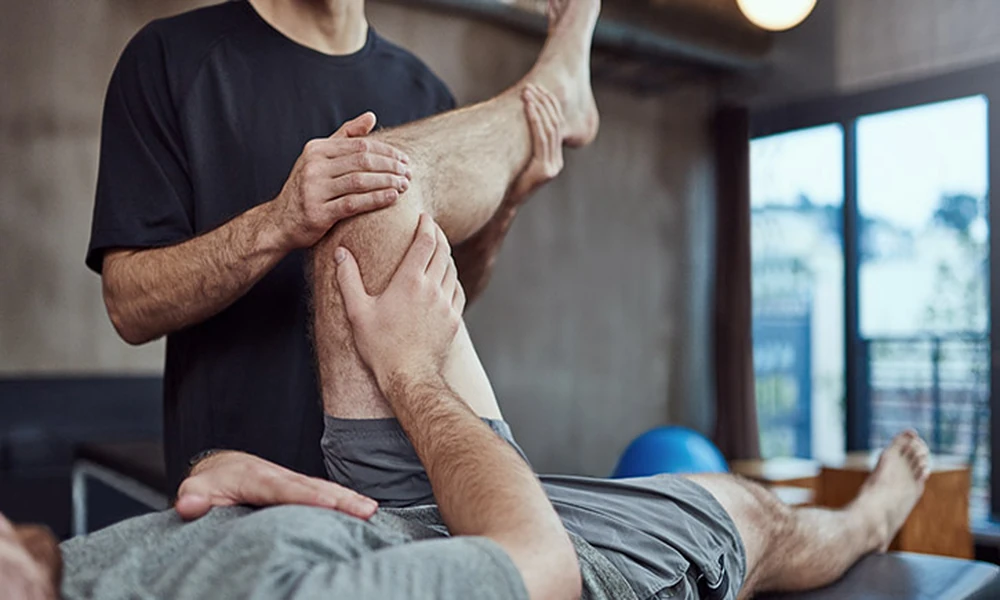
Manual therapy encompasses a range of hands-on techniques applied by a trained clinician to the affected soft tissues. These techniques are used to improve tissue mobility, reduce pain, normalise muscle tone, and facilitate the realignment of scar tissue in directions that restore functional capacity.
Common manual therapy techniques in soft tissue rehabilitation include:
- Myofascial release – sustained pressure applied to restricted areas of fascia to reduce tension and improve tissue glide
- Trigger point therapy – targeted pressure on areas of hypersensitive muscle tissue that refer pain to adjacent areas
- Joint mobilisation – graded passive movement applied to a joint to restore normal articular mechanics
- Soft tissue manipulation – direct work on muscle bellies, tendons, and their attachments to reduce adhesion and improve extensibility
These techniques, applied by a clinician with accurate palpatory skills, produce outcomes that passive rest and self-directed stretching alone cannot replicate.
Instrument-Assisted Techniques
Instrument-assisted soft tissue mobilisation, most commonly associated with the IASTM approach using stainless steel tools, has become a standard element of advanced soft tissue rehabilitation programmes. The tools allow the clinician to identify and treat areas of fibrosis, restricted fascia, and scar tissue with greater precision and mechanical advantage than hands alone.
The tools are used with controlled strokes across the affected tissue, creating a microtrauma that stimulates a targeted healing response. This response, combined with appropriate loading and movement during the rehabilitation phase, promotes the remodelling of scar tissue into more organised and functional tissue.
Soft tissue rehabilitation using manual and instrument therapy is not a replacement for exercise-based rehabilitation. It is a clinical complement that prepares the tissue for more effective loading and reduces the barriers to full functional recovery.
Conditions That Respond Well to This Approach
A wide range of soft tissue conditions respond to this combined treatment approach.
- Tendinopathies – chronic tendon conditions such as plantar fasciitis, Achilles tendinopathy, and rotator cuff issues benefit from both manual therapy to reduce associated muscle tension and instrument-assisted work to address the tendon itself
- Post-operative scar management – surgical incisions produce scar tissue that can restrict movement and cause discomfort. Manual and instrument therapy applied to the matured scar improves tissue mobility significantly
- Ligament sprains – particularly ankle and knee sprains, where residual restriction in the surrounding soft tissues affects proprioception and functional stability
- Muscle strains – hamstring, calf, and hip flexor strains are common presentations where guided rehabilitation prevents the re-injury pattern that often follows inadequate recovery
As Senior Minister Tharman Shanmugaratnam has noted, “Investing in recovery is investing in long-term performance, whether in sport, in work, or in daily life.” That principle applies directly to soft tissue rehabilitation. Cutting the process short is where re-injury begins.
What a Rehabilitation Programme Looks Like
A structured rehabilitation programme for soft tissue injury typically progresses through several phases: initial pain management and tissue protection, progressive loading to promote organised healing, and functional rehabilitation that rebuilds strength and movement patterns specific to the patient’s goals.
The duration and intensity of each phase depends on the nature and severity of the original injury, the patient’s baseline fitness, and the demands of their daily life or sport.
Returning to Full Function
The measure of a successful soft tissue rehabilitation programme is not pain resolution alone. It is the restoration of the full capacity that existed before the injury: range of motion, strength, proprioception, and the confidence to load the affected area without guarding. Post-injury soft tissue rehabilitation with manual and instrument therapy, applied consistently and progressed appropriately, is what makes that outcome achievable.
