

Nobody enjoys wearing a temporary crown. It’s a small inconvenience compared to the underlying dental work, but temporaries can feel loose, trap food, and generally remind you that your treatment isn’t finished. For years, patients simply accepted that a permanent crown or bridge would take two to three weeks to come back from the lab. That timeline is shrinking, and it’s worth understanding why.
The old workflow involved a lot of physical handling: a putty impression, a plaster model poured from that impression, the model shipped to a lab, a technician sculpting the restoration by hand or with basic tools, then shipping it back for a fitting. Every one of those steps added days, and every physical handoff was a chance for something to shift slightly out of tolerance.
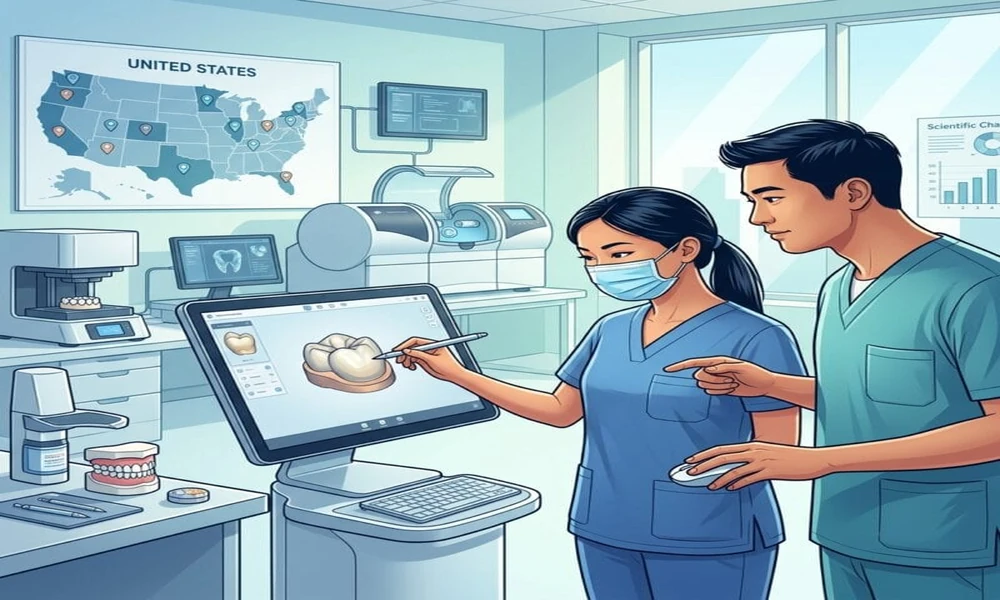
Digital workflows remove most of that friction. A scan replaces the impression and travels instantly rather than by courier. Design happens on a screen, where margins and contacts can be checked and corrected in minutes rather than requiring a redo of the physical model. Because the file is digital from the very first step, an overseas 3d labo partner can pick up a case the moment it’s scanned, work on it overnight in a different time zone, and have a production-ready file back before the clinic even opens the next morning.
That last point matters more than it might seem. Time zone differences, often seen as a drawback in other industries, actually work in a dental clinic’s favor here, cases submitted at the end of one business day can be designed while the clinic is closed, ready for manufacturing and fitting the next day.
For patients, faster turnaround isn’t just about convenience, though that matters. It also tends to mean fewer separate appointments, less time in a temporary restoration that isn’t meant to last, and a shorter overall gap between the problem being diagnosed and being fully resolved. As digital workflows keep maturing, “back in two weeks” is quickly becoming the exception rather than the rule.
If a fast turnaround matters to you, it’s worth asking your dentist directly whether their lab works digitally, since that single detail often predicts how long you’ll actually be waiting.
