

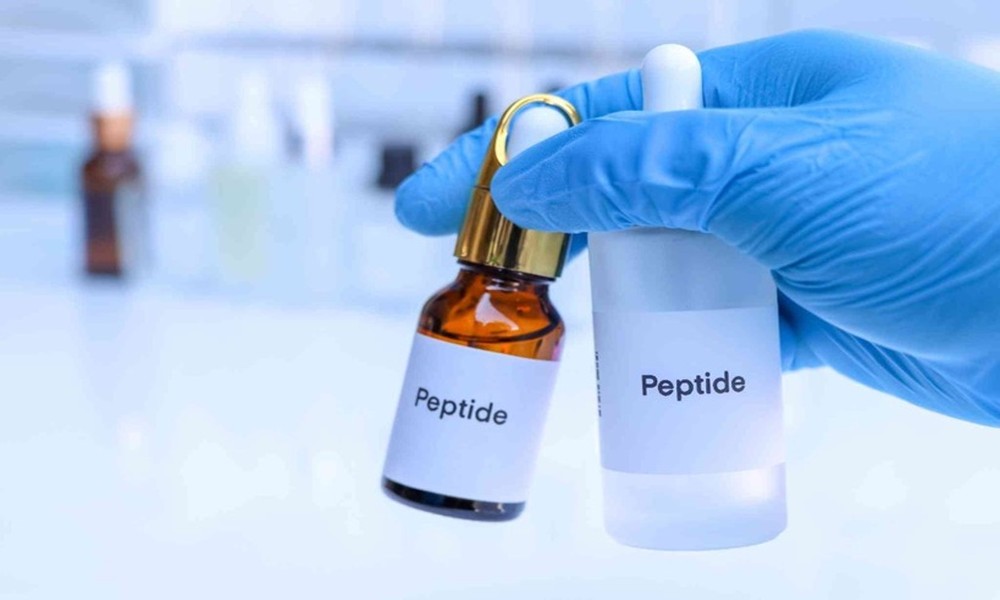
Recovery is one of the most talked-about themes in modern health and fitness. It sits at the centre of performance, resilience, and healthy ageing, which is exactly why emerging research topics can attract so much attention. Peptides are one example. They are often discussed in relation to tissue repair, metabolic signalling, and recovery biology, but early-stage interest should not be mistaken for settled health guidance.
Why recovery research attracts so much curiosity
Section summary: Recovery feels immediately relevant, which is why readers are often drawn to anything that sounds biologically advanced.
Recovery is not a niche concern. It matters to athletes, recreational gym-goers, people returning from injury, and anyone interested in staying physically capable as they get older. It also carries a broader appeal because recovery is linked to more than soreness or rest days. It touches tissue repair, inflammation, adaptation, sleep, resilience, and the body’s ability to maintain function over time.
That wider relevance helps explain why recovery research gets so much attention. If a compound appears to interact with repair pathways or biological signalling tied to resilience, people naturally want to know more. But this is exactly where evidence standards become important. In health writing, curiosity is not the same as certainty.
What early research can do well
Section summary: Early research is useful for identifying mechanisms and raising questions, even when it cannot yet answer practical health questions.
Early research plays an important role in science. It helps researchers explore mechanisms, test hypotheses, and identify whether a topic deserves further investigation. In the context of peptides, that often means studying how short amino-acid chains interact with receptors, signalling pathways, angiogenesis, tissue response, or metabolic regulation. Your guide explains that clearly and places these compounds within biomedical research rather than established clinical use.
That kind of work matters. Without early-stage investigation, there would be no path toward better evidence. It can help researchers understand whether a pathway is biologically interesting, whether a signal appears worth following, and where future human research might be needed.
What it cannot do is settle the bigger questions on its own.
What early research cannot tell us yet
Section summary: Early-stage findings may point somewhere useful, but they do not automatically tell us what is safe, effective, or meaningful in humans over time.
This is where a lot of health content loses perspective. A peptide may show activity in a cell model or an animal study. It may even look promising in relation to tissue integrity, wound signalling, angiogenesis, or metabolic pathways. But none of that automatically tells us that the same pattern will prove useful, safe, or clinically meaningful in humans. Your guide repeatedly stresses this point: many of the compounds discussed remain investigational, much of the evidence is preclinical, and long-term human safety and efficacy are not established.
That distinction matters because readers often hear “being researched” as “basically validated.” In reality, those are very different stages of the scientific process.
Why peptides come up in recovery conversations
Section summary: Peptides enter recovery discussions because some have been studied in pathways related to repair, not because the science is already settled.
Peptides fit naturally into recovery discussions because recovery itself is a biological process involving signalling, repair, blood flow, inflammation, and adaptation. According to your overview, certain investigational peptides have been studied for potential roles in tissue repair, metabolic signalling, endothelial function, cell migration, and other pathways relevant to healing and recovery research.
That gives them a legitimate place in the broader conversation around recovery science. But it does not justify treating them as established tools. The better interpretation is narrower and more honest: peptides may be relevant to recovery as a research topic, while still remaining far from settled practical guidance.
Readers who want a neutral summary of that landscape can start with this research guide to current peptide evidence and recovery-related mechanisms.
Why preclinical promise should be handled carefully
Section summary: Preclinical findings can be interesting without being transferable to real-world health advice.
This is one of the most common weak points in fitness and wellness writing. A compound looks interesting in an early model, and the conversation quickly widens into claims about recovery, resilience, longevity, or performance support. But the leap from preclinical promise to human relevance is exactly where the caution should increase.
Your guide makes that boundary clear. For example, it describes BPC-157 and TB-500 in relation to tissue integrity, cell migration, wound-healing pathways, and animal-model research, while also stating that human clinical evidence is extremely limited or lacking and that safety profiles are not established. It makes the same broader point across the category: no peptide listed has been approved for therapeutic human use, and large-scale trials establishing safety or efficacy are not in place.
That is what early evidence looks like when it is interpreted properly: interesting enough to study, not strong enough to overstate.
Why “mechanism” is not the same as “outcome”
Section summary: A peptide can interact with a pathway that sounds relevant to recovery without proving a real-world health benefit.
Mechanisms matter in research, but they are easy to over-romanticise in health content. Words like angiogenesis, mitochondrial function, inflammatory modulation, or cell signalling can make a topic sound more advanced and more convincing than it really is. The issue is not whether those mechanisms are real. The issue is whether they have translated into strong human outcomes.
That translation gap matters because it changes how a reader should understand the topic. A biologically active pathway is not the same as an established intervention. A mechanistic rationale is not the same as a clear safety profile. And an early signal is not the same as evidence strong enough to anchor practical health advice. Your guide supports exactly that more cautious reading by consistently separating mechanistic interest from validated therapeutic use.
Why safety and regulation still shape the conversation
Section summary: Recovery writing becomes misleading when it talks about biological promise without also explaining uncertainty, approval status, and risk.
Any honest article on early peptide research has to keep the safety picture in view. According to your guide, the peptides discussed are not approved for human or veterinary use, lack validated human safety profiles and comprehensive toxicity data, and may also raise concerns around purity and actual content outside regulated pharmaceutical manufacturing. The guide also notes FDA safety concerns around certain peptides in compounding contexts and explains that peptides and related growth factors can fall within WADA prohibited categories.
That does not mean the topic cannot be discussed. It means the discussion has to remain proportionate. Recovery is a valuable subject, and peptide research may be part of that research landscape, but the article should leave readers with clarity about what remains unknown rather than a polished impression of certainty.
What better recovery content should do
Section summary: Strong recovery writing should explain the science while still returning readers to fundamentals.
A good article on recovery does not ignore emerging science, but it also does not let emerging science push the basics out of frame. The strongest recovery outcomes still depend on familiar variables: sleep quality, sufficient nutrition, protein intake, sensible training load, hydration, and enough room for adaptation to happen. Early peptide research may help scientists understand repair biology more deeply, but it does not replace the fundamentals that shape recovery every day.
That is one reason better health content feels more grounded. It uses science to improve the reader’s understanding, not to make the topic sound more futuristic than the evidence allows.
Final thought
Section summary: Early peptide research can help explain recovery biology, but it should not be treated as a shortcut to certainty.
Early peptide research can tell us useful things. It can show which pathways researchers find interesting. It can help explain why tissue repair, signalling, and metabolic regulation have become central themes in recovery science. It can point toward questions worth investigating further.
What it cannot do, at least not yet, is remove uncertainty. It cannot replace large-scale human evidence. It cannot answer long-term safety questions by implication. And it should not be presented as if scientific interest alone has already translated into practical health certainty.
That is the difference between trend-led writing and genuinely useful health content. One makes early science sound finished. The other respects where the science actually is.
