

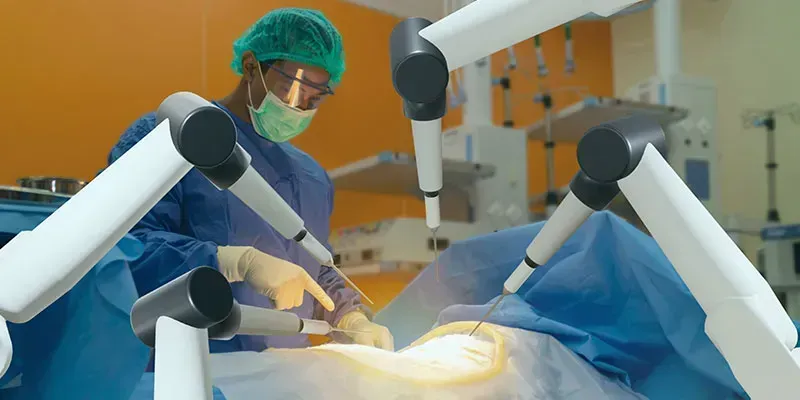
The development of robotic surgery has revolutionized medicine by opening up new avenues for minimally invasive and precise procedures. Surgeons must receive thorough training and education in order to use robotic systems effectively, preserve patient safety, and achieve competency. The need for demanding training programs and continuing education grows as robotic technology advances.
Elements of Successful a Robotic Surgery Course and Training Initiatives
Robotic surgeon training programs that are effective include a number of essential elements to guarantee thorough learning and skill development. Above all, systematic didactic education imparts fundamental understanding about robotic systems, including their parts, features, and working principles.
Another essential component of a successful robotic surgery course is practical training. To improve their technical abilities, surgeons must practice using robotic simulators or training models. Surgeons can practice surgical procedures repeatedly in a safe setting with these simulations, which helps them become more comfortable with the robotic interface, become proficient with handling instruments, and improve their hand-eye coordination.
Furthermore, putting theoretical and simulated skills into practical application requires supervised clinical training. In this stage, surgeons execute robotic-assisted surgeries under supervision while working in clinical settings with seasoned mentors. This mentorship ensures that surgeons gain the proficiency and self-assurance necessary to operate robotic systems safely and successfully by offering insightful criticism, direction, and support.
Keeping Patients Safe
Robotic surgery places a high priority on patient safety, and efficient training programs are created with this objective in mind. Surgeons need to be knowledgeable about how to operate robotic systems safely, including how to recognize and handle possible dangers and issues. Understanding system constraints, spotting equipment malfunctions, and putting the right corrective measures in place are all stressed in training programs.
For patient safety, preoperative preparation and communication are also essential. Before beginning robotic-assisted surgeries, surgeons must carefully analyze patient data, discuss surgical plans with the multidisciplinary team, and make sure that all necessary preparations are in place. Setting reasonable expectations and encouraging informed consent are two benefits of effectively informing patients about the advantages and hazards of robotic surgery.
To ensure competence and safety in robotic-assisted treatments, robotic surgeons must receive training and instruction. Robotic surgeons must be trained in comprehensive programs that incorporate didactic instruction, practical experience, and clinical supervision. Innovative training techniques and standardized educational procedures will become more crucial in determining the direction of surgical practice and enhancing patient outcomes as the field of robotic surgery develops.
